


Page 184 - Le Operazioni Interforze e Multinazionali nella Storia Militare - ACTA Tomo II
P. 184
824                                XXXIX Congresso della CommIssIone InternazIonale dI storIa mIlItare • CIHm


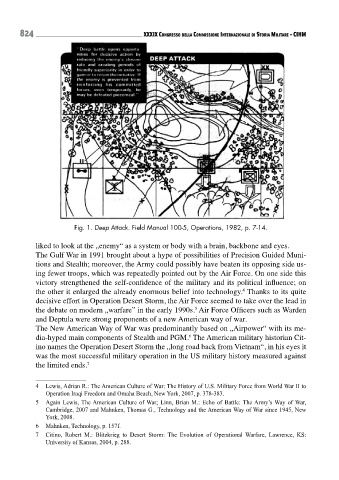
                      Fig. 1. Deep Attack. Field Manual 100-5, Operations, 1982, p. 7-14.

           liked to look at the „enemy“ as a system or body with a brain, backbone and eyes.
           The Gulf War in 1991 brought about a hype of possibilities of Precision Guided Muni-
           tions and Stealth; moreover, the Army could possibly have beaten its opposing side us-
           ing fewer troops, which was repeatedly pointed out by the Air Force. On one side this
           victory strengthened the self-confidence of the military and its political influence; on
                                                                      4
           the other it enlarged the already enormous belief into technology.  Thanks to its quite
           decisive effort in Operation Desert Storm, the Air Force seemed to take over the lead in
                                                        5
           the debate on modern „warfare” in the early 1990s.  Air Force Officers such as Warden
           and Deptula were strong proponents of a new American way of war.
           The New American Way of War was predominantly based on „Airpower“ with its me-
           dia-hyped main components of Stealth and PGM.  The American military historian Cit-
                                                       6
           ino names the Operation Desert Storm the „long road back from Vietnam“, in his eyes it
           was the most successful military operation in the US military history measured against
           the limited ends. 7


           4    Lewis, Adrian R.: The American Culture of War: The History of U.S. Military Force from World War II to
              Operation Iraqi Freedom and Omaha Beach, New York, 2007, p. 378-383.
           5    Again Lewis, The American Culture of War; Linn, Brian M.: Echo of Battle: The Army’s Way of War,
              Cambridge, 2007 and Mahnken, Thomas G., Technology and the American Way of War since 1945, New
              York, 2008.
           6    Mahnken, Technology, p. 157f.
           7    Citino,  Robert  M.:  Blitzkrieg  to  Desert  Storm:  The  Evolution  of  Operational  Warfare,  Lawrence,  KS:
              University of Kansas, 2004, p. 288.

