


Page 185 - Le Operazioni Interforze e Multinazionali nella Storia Militare - ACTA Tomo II
P. 185
825
          ActA


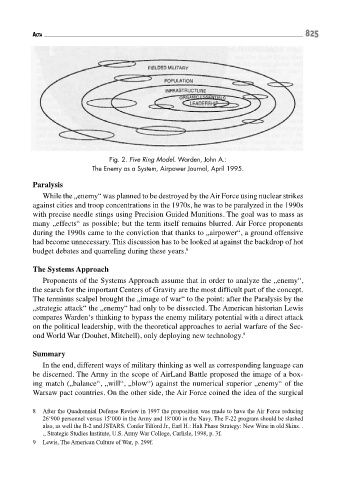
                                Fig. 2. Five Ring Model. Warden, John A.:
                           The Enemy as a System, Airpower Journal, April 1995.

          Paralysis
             While the „enemy“ was planned to be destroyed by the Air Force using nuclear strikes
          against cities and troop concentrations in the 1970s, he was to be paralyzed in the 1990s
          with precise needle stings using Precision Guided Munitions. The goal was to mass as
          many „effects“ as possible; but the term itself remains blurred. Air Force proponents
          during the 1990s came to the conviction that thanks to „airpower“, a ground offensive
          had become unnecessary. This discussion has to be looked at against the backdrop of hot
          budget debates and quarreling during these years. 8

          The Systems Approach
             Proponents of the Systems Approach assume that in order to analyze the „enemy“,
          the search for the important Centers of Gravity are the most difficult part of the concept.
          The terminus scalpel brought the „image of war“ to the point: after the Paralysis by the
          „strategic attack“ the „enemy“ had only to be dissected. The American historian Lewis
          compares Warden‘s thinking to bypass the enemy military potential with a direct attack
          on the political leadership, with the theoretical approaches to aerial warfare of the Sec-
          ond World War (Douhet, Mitchell), only deploying new technology. 9

          Summary
             In the end, different ways of military thinking as well as corresponding language can
          be discerned. The Army in the scope of AirLand Battle proposed the image of a box-
          ing match („balance“, „will“, „blow“) against the numerical superior „enemy“ of the
          Warsaw pact countries. On the other side, the Air Force coined the idea of the surgical

          8    After the Quadrennial Defense Review in 1997 the proposition was made to have the Air Force reducing
             26‘900 personnel versus 15‘000 in the Army and 18‘000 in the Navy. The F-22 program should be slashed
             also, as well the B-2 and JSTARS. Confer Tilford Jr., Earl H.: Halt Phase Strategy: New Wine in old Skins. .
             ., Strategic Studies Institute, U.S. Army War College, Carlisle, 1998, p. 3f.
          9    Lewis, The American Culture of War, p. 299f.

