


Page 484 - Le Operazioni Interforze e Multinazionali nella Storia Militare - ACTA Tomo II
P. 484
1124                                XXXIX Congresso della CommIssIone InternazIonale dI storIa mIlItare • CIHm


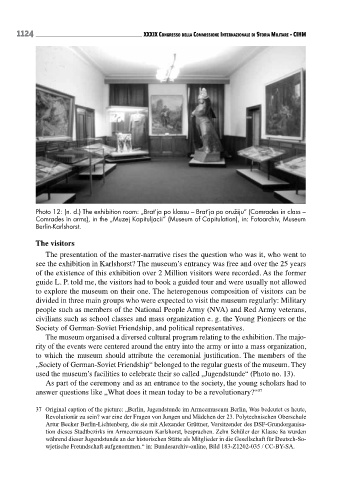
           Photo 12: (n. d.) The exhibition room: „Brat‘ja po klassu – Brat‘ja po oružiju“ (Comrades in class –
           Comrades in arms), in the „Muzej Kapituljacii“ (Museum of Capitulation), in: Fotoarchiv, Museum
           Berlin-Karlshorst.

           The visitors
              The presentation of the master-narrative rises the question who was it, who went to
           see the exhibition in Karlshorst? The museum’s entrancy was free and over the 25 years
           of the existence of this exhibition over 2 Million visitors were recorded. As the former
           guide L. P. told me, the visitors had to book a guided tour and were usually not allowed
           to explore the museum on their one. The heterogenous composition of visitors can be
           divided in three main groups who were expected to visit the museum regularly: Military
           people such as members of the National People Army (NVA) and Red Army veterans,
           civilians such as school classes and mass organization e. g. the Young Pionieers or the
           Society of German-Soviet Friendship, and political representatives.
              The museum organised a diversed cultural program relating to the exhibition. The majo-
           rity of the events were centered around the entry into the army or into a mass organization,
           to which the museum should attribute the ceremonial justification. The members of the
           „Society of German-Soviet Friendship“ belonged to the regular guests of the museum. They
           used the museum’s facilities to celebrate their so called „Jugendstunde“ (Photo no. 13).
              As part of the ceremony and as an entrance to the society, the young scholars had to
           answer questions like „What does it mean today to be a revolutionary?“ 37

           37  Original caption of the picture: „Berlin, Jugendstunde im Armeemuseum Berlin, Was bedeutet es heute,
              Revolutionär zu sein? war eine der Fragen von Jungen und Mädchen der 23. Polytechnischen Oberschule
              Artur Becker Berlin-Lichtenberg, die sie mit Alexander Grüttner, Vorsitzender des DSF-Grundorganisa-
              tion dieses Stadtbezirks im Armeemuseum Karlshorst, besprachen. Zehn Schüler der Klasse 8a wurden
              während dieser Jugendstunde an der historischen Stätte als Mitglieder in die Gesellschaft für Deutsch-So-
              wjetische Freundschaft aufgenommen.“ in: Bundesarchiv-online, Bild 183-Z1202-035 / CC-BY-SA.

