


Page 482 - Le Operazioni Interforze e Multinazionali nella Storia Militare - ACTA Tomo II
P. 482
1122                                XXXIX Congresso della CommIssIone InternazIonale dI storIa mIlItare • CIHm


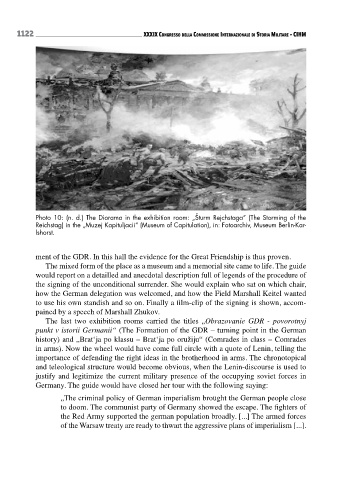
           Photo 10: (n. d.) The Diorama in the exhibition room: „Šturm Rejchstaga“ (The Storming of the
           Reichstag) in the „Muzej Kapituljacii“ (Museum of Capitulation), in: Fotoarchiv, Museum Berlin-Kar-
           lshorst.


           ment of the GDR. In this hall the evidence for the Great Friendship is thus proven.
              The mixed form of the place as a museum and a memorial site came to life. The guide
           would report on a detailled and anecdotal description full of legends of the procedure of
           the signing of the unconditional surrender. She would explain who sat on which chair,
           how the German delegation was welcomed, and how the Field Marshall Keitel wanted
           to use his own standish and so on. Finally a film-clip of the signing is shown, accom-
           pained by a speech of Marshall Zhukov.
              The  last  two exhibition  rooms  carried  the  titles  „Obrazovanie  GDR - povorotnyj
           punkt v istorii Germanii“ (The Formation of the GDR – turning point in the German
           history) and „Brat‘ja po klassu – Brat‘ja po oružiju“ (Comrades in class – Comrades
           in arms). Now the wheel would have come full circle with a quote of Lenin, telling the
           importance of defending the right ideas in the brotherhood in arms. The chronotopical
           and teleological structure would become obvious, when the Lenin-discourse is used to
           justify and legitimize the current military presence of the occupying soviet forces in
           Germany. The guide would have closed her tour with the following saying:
                  „The criminal policy of German imperialism brought the German people close
                  to doom. The communist party of Germany showed the escape. The fighters of
                  the Red Army supported the german population broadly. [...] The armed forces
                  of the Warsaw treaty are ready to thwart the aggressive plans of imperialism [...].

