


Page 478 - Le Operazioni Interforze e Multinazionali nella Storia Militare - ACTA Tomo II
P. 478
1118                                XXXIX Congresso della CommIssIone InternazIonale dI storIa mIlItare • CIHm


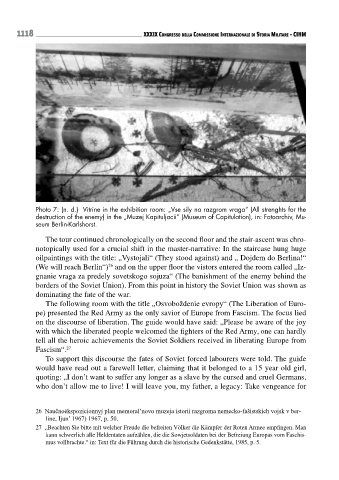
           Photo 7: (n. d.)  Vitrine in the exhibition room: „Vse sily na razgrom vraga“ (All strenghts for the
           destruction of the enemy) in the „Muzej Kapituljacii“ (Museum of Capitulation), in: Fotoarchiv, Mu-
           seum Berlin-Karlshorst.

              The tour continued chronologically on the second floor and the stair-ascent was chro-
           notopically used for a crucial shift in the master-narrative: In the staircase hung huge
           oilpaintings with the title: „Vystojali“ (They stood against) and „ Dojdem do Berlina!“
                                26
           (We will reach Berlin“)  and on the upper floor the vistors entered the room called „Iz-
           gnanie vraga za predely sovetskogo sojuza“ (The banishment of the enemy behind the
           borders of the Soviet Union). From this point in history the Soviet Union was shown as
           dominating the fate of the war.
              The following room with the title „Osvoboždenie evropy“ (The Liberation of Euro-
           pe) presented the Red Army as the only savior of Europe from Fascism. The focus lied
           on the discourse of liberation. The guide would have said: „Please be aware of the joy
           with which the liberated people welcomed the fighters of the Red Army, one can hardly
           tell all the heroic achievements the Soviet Soldiers received in liberating Europe from
           Fascism“. 27
              To support this discourse the fates of Soviet forced labourers were told. The guide
           would have read out a farewell letter, claiming that it belonged to a 15 year old girl,
           quoting: „I don’t want to suffer any longer as a slave by the cursed and cruel Germans,
           who don’t allow me to live! I will leave you, my father, a legacy: Take vengeance for


           26  Naučnoėkspozicionnyj plan memoral’novo muzeja istorii razgroma nemecko-fašistskich vojsk v ber-
              line, Ijun’ 1967) 1967, p. 50.
           27  „Beachten Sie bitte mit welcher Freude die befreiten Völker die Kämpfer der Roten Armee empfingen. Man
              kann schwerlich alle Heldentaten aufzählen, die die Sowjetsoldaten bei der Befreiung Europas vom Faschis-
              mus vollbrachte.“ in: Text für die Führung durch die historische Gedenkstätte, 1985, p. 5.

