


Page 198 - The Secret War in the Italian front in WWI (1915-1918)
P. 198
THE SECRET WAR ON THE ITALIAN FRONT IN WWI (1915 – 1918)


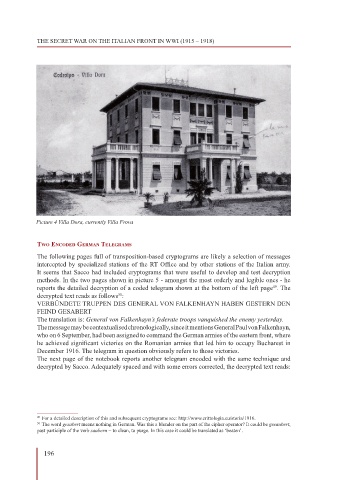
              Picture 4 Villa Dora, currently Villa Frova


              Two encoded gerMan TelegraMs
              The following pages full of transposition-based cryptograms are likely a selection of messages
              intercepted by specialized stations of the RT Office and by other stations of the Italian army.
              It seems that Sacco had included cryptograms that were useful to develop and test decryption
              methods. In the two pages shown in picture 5 - amongst the most orderly and legible ones - he
              reports the detailed decryption of a coded telegram shown at the bottom of the left page . The
                                                                                                 49
              decrypted text reads as follows :
                                           50
              VERBÜNDETE TRUPPEN DES GENERAL VON FALKENHAYN HABEN GESTERN DEN
              FEIND GESABERT
              The translation is: General von Falkenhayn’s federate troops vanquished the enemy yesterday.
              The message may be contextualised chronologically, since it mentions General Paul von Falkenhayn,
              who on 6 September, had been assigned to command the German armies of the eastern front, where
              he achieved significant victories on the Romanian armies that led him to occupy Bucharest in
              December 1916. The telegram in question obviously refers to those victories.
              The next page of the notebook reports another telegram encoded with the same technique and
              decrypted by Sacco. Adequately spaced and with some errors corrected, the decrypted text reads:


              49   For a detailed description of this and subsequent cryptograms see: http://www.crittologia.eu/storia/1916.
              50   The word gesabert means nothing in German. Was this a blunder on the part of the cipher operator? It could be gesaubert,
              past participle of the verb saubern = to clean, to purge. In this case it could be translated as ‘beaten’.


                196

