


Page 218 - Le Operazioni Interforze e Multinazionali nella Storia Militare - ACTA Tomo I
P. 218
218                                XXXIX Congresso della CommIssIone InternazIonale dI storIa mIlItare • CIHm


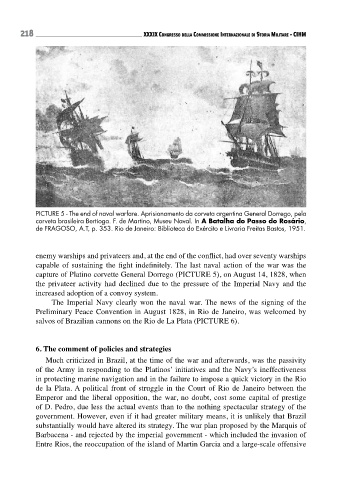
           PICTURE 5 - The end of naval warfare. Aprisionamento da corveta argentina General Dorrego, pela
           corveta brasileira Bertioga. F. de Martino, Museu Naval. In A Batalha do Passo do Rosário,
           de FRAGOSO, A.T, p. 353. Rio de Janeiro: Biblioteca do Exército e Livraria Freitas Bastos, 1951.


           enemy warships and privateers and, at the end of the conflict, had over seventy warships
           capable of sustaining the fight indefinitely. The last naval action of the war was the
           capture of Platino corvette General Dorrego (PICTURE 5), on August 14, 1828, when
           the privateer activity had declined due to the pressure of the Imperial Navy and the
           increased adoption of a convoy system.
                The Imperial Navy clearly won the naval war. The news of the signing of the
           Preliminary Peace Convention in August 1828, in Rio de Janeiro, was welcomed by
           salvos of Brazilian cannons on the Rio de La Plata (PICTURE 6).


           6. The comment of policies and strategies
              Much criticized in Brazil, at the time of the war and afterwards, was the passivity
           of the Army in responding to the Platinos’ initiatives and the Navy’s ineffectiveness
           in protecting marine navigation and in the failure to impose a quick victory in the Rio
           de la Plata. A political front of struggle in the Court of Rio de Janeiro between the
           Emperor and the liberal opposition, the war, no doubt, cost some capital of prestige
           of D. Pedro, due less the actual events than to the nothing spectacular strategy of the
           government. However, even if it had greater military means, it is unlikely that Brazil
           substantially would have altered its strategy. The war plan proposed by the Marquis of
           Barbacena - and rejected by the imperial government - which included the invasion of
           Entre Rios, the reoccupation of the island of Martin Garcia and a large-scale offensive

