


Page 219 - Le Operazioni Interforze e Multinazionali nella Storia Militare - ACTA Tomo I
P. 219
219
          ActA


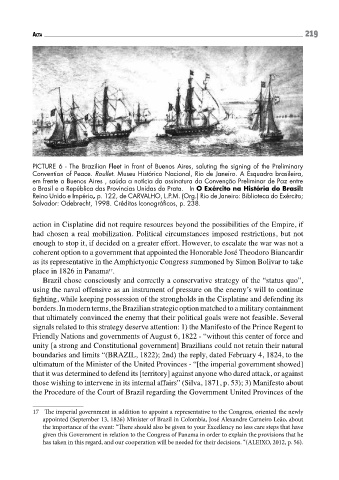
          PICTURE 6 - The Brazilian Fleet in front of Buenos Aires, saluting the signing of the Preliminary
          Convention of Peace. Roullet. Museu Histórico Nacional, Rio de Janeiro. A Esquadra brasileira,
          em frente a Buenos Aires , saúda a notícia da assinatura da Convenção Preliminar de Paz entre
          o Brasil e a República das Províncias Unidas do Prata.   In O Exército na História do Brasil:
          Reino Unido e Império, p. 122, de CARVALHO, L.P.M. (Org.) Rio de Janeiro: Biblioteca do Exército;
          Salvador: Odebrecht, 1998. Créditos Iconográficos, p. 238.


          action in Cisplatine did not require resources beyond the possibilities of the Empire, if
          had chosen a real mobilization. Political circumstances imposed restrictions, but not
          enough to stop it, if decided on a greater effort. However, to escalate the war was not a
          coherent option to a government that appointed the Honorable José Theodoro Biancardir
          as its representative in the Amphictyonic Congress summoned by Simon Bolivar to take
          place in 1826 in Panama .
                                17
             Brazil chose consciously and correctly a conservative strategy of the “status quo”,
          using the naval offensive as an instrument of pressure on the enemy’s will to continue
          fighting, while keeping possession of the strongholds in the Cisplatine and defending its
          borders. In modern terms, the Brazilian strategic option matched to a military containment
          that ultimately convinced the enemy that their political goals were not feasible. Several
          signals related to this strategy deserve attention: 1) the Manifesto of the Prince Regent to
          Friendly Nations and governments of August 6, 1822 - “without this center of force and
          unity [a strong and Constitutional government] Brazilians could not retain their natural
          boundaries and limits “(BRAZIL, 1822); 2nd) the reply, dated February 4, 1824, to the
          ultimatum of the Minister of the United Provinces - “[the imperial government showed]
          that it was determined to defend its [territory] against anyone who dared attack, or against
          those wishing to intervene in its internal affairs” (Silva, 1871, p. 53); 3) Manifesto about
          the Procedure of the Court of Brazil regarding the Government United Provinces of the

          17   The imperial government in addition to appoint a representative to the Congress, oriented the newly
             appointed (September 13, 1826) Minister of Brazil in Colombia, José Alexandre Carneiro Leão, about
             the importance of the event: “There should also be given to your Excellency no less care steps that have
             given this Government in relation to the Congress of Panama in order to explain the provisions that he
             has taken in this regard, and our cooperation will be needed for their decisions. “(ALEIXO, 2012, p. 56).

