


Page 241 - The Secret War in the Italian front in WWI (1915-1918)
P. 241
CHAPTER ELEVEN


                  As far as the participation of the Cryptographic Unit to antisubmarine warfare is concerned, the
                  piece of information sent to the Italian Navy on 27 June concerning the repair of German submarine
                  UC 53 in the Spanish port of Cadiz should be mentioned . From another well-informed source, we
                                                                     26
                  learn that, between 11 and 29 June, German submarine UC 52 travelling from Germany to Kotor,
                  was under repair in port of Cadiz . Perhaps the U52 and U53 (picture 11.3) arriving in Cadiz from
                                                27
                  Germany in June, both with the task of laying mines in the Mediterranean, were sheltered at the
                  same time in port of Cadiz.


                  11.3  TELECOMMUNICATIONS SECURITY ISSUES


                  The vulnerabIlITy of TelecoMMunIcaTIons
                                                                     The      increasingly      devastating
                                                                     destructions caused, during the conflict
                                                                     by a higher number of larger calibre
                                                                     artillery pieces systematically severed,
                                                                     especially in the initial phases of
                                                                     attacks, the physical communications
                                                                     connections, including those prepared
                                                                     with special care, and fostered the
                                                                     spread of radiotelegraphy on the first
                                                                     lines of the front .
                                                                                     28
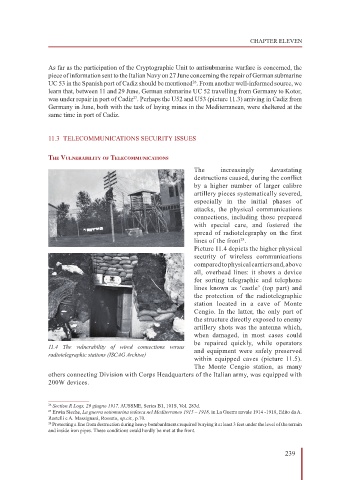
                                                                     Picture 11.4 depicts the higher physical
                                                                     security of wireless communications
                                                                     compared to physical carriers and, above
                                                                     all, overhead lines: it shows a device
                                                                     for sorting telegraphic and telephone
                                                                     lines known as ‘castle’ (top part) and
                                                                     the protection of the radiotelegraphic
                                                                     station located in a cave of Monte
                                                                     Cengio. In the latter, the only part of
                                                                     the structure directly exposed to enemy
                                                                     artillery shots was the antenna which,
                                                                     when damaged, in most cases could
                                                                     be repaired quickly, while operators
                  11.4  The  vulnerability  of  wired  connections  versus   and equipment were safely preserved
                  radiotelegraphic stations (ISCAG Archive)
                                                                     within equipped caves (picture 11.5).
                                                                     The Monte  Cengio station, as many
                  others connecting Division with Corps Headquarters of the Italian army, was equipped with
                  200W devices.


                  26  Section R Logs, 29 giugno 1917. AUSSME, Series B1, 101S, Vol. 283d.
                  27  Erwin Sieche, La guerra sottomarina tedesca nel Mediterraneo 1915 – 1918, in La Guerra navale 1914 -1918, Edito da A.
                  Rastelli e A. Massignani, Rossato, op.cit., p.70.
                  28  Protecting a line from destruction during heavy bombardments required burying it at least 3 feet under the level of the terrain
                  and inside iron pipes. These conditions could hardly be met at the front.


                                                                                                     239

